When the guns finally fell silent over Gaza, the world exhaled. The ceasefire that many had called impossible was suddenly real — fragile, contested, but real. In the swirl of statements and political claims that followed, one name kept reappearing: Donald J. Trump.

For weeks, Trump had been insisting that only his team could end the bloodshed. He’d teased his “plan” at rallies, promised to bring hostages home, and warned that “all hell would break loose” if negotiations failed. And, in the end, when Israel and Hamas agreed to a halt in fighting and a framework for prisoner exchanges, Trump was quick to declare victory.
But how much of this ceasefire can truly be credited to him? And what does his re-entry into Middle East diplomacy mean for a region already scarred by decades of conflict?
The Road to a Fragile Peace
The 2023 Gaza war began with Hamas’s deadly October 7th attack on Israel — a moment that plunged the region into chaos. Israel’s military response devastated Gaza, displacing more than a million people and triggering one of the worst humanitarian crises in modern history. By mid-2025, pressure for a ceasefire had reached a boiling point.
The United Nations warned of “imminent famine.” Arab governments faced mounting protests. Western allies, including the U.S., were desperate for a political off-ramp that could stop the cycle of bloodshed without appearing to reward Hamas.
Multiple ceasefire attempts — first under President Biden, then through Qatar and Egypt — had failed or collapsed within days. It was in that vacuum that Trump, newly emboldened by his political comeback, saw an opening.
He presented himself as the deal-maker the world needed again.
Enter Trump: The Self-Styled Peacemaker
From his estate in Florida, Trump began a series of back-channel efforts that would eventually shape the contours of the current ceasefire. He dispatched his longtime ally and real-estate magnate Steve Witkoff as a special envoy, tasked with coordinating with Israeli officials, regional leaders, and U.S. intermediaries.
Witkoff became the face of Trump’s foreign policy push — holding meetings in Doha, Cairo, and Jerusalem. The tone was classic Trump diplomacy: blunt, transactional, and theatrical. But it was effective enough to reopen stalled talks.
By September 2025, Trump’s team circulated what became known as the “20-Point Gaza Peace Framework.” It outlined a phased ceasefire: the release of hostages, partial Israeli withdrawals, humanitarian corridors, and eventually, a transitional governing authority in Gaza.
Trump sold it as a simple bargain — “Peace for prosperity,” echoing his earlier Abraham Accords rhetoric. Critics called it vague and self-serving, but it had one undeniable advantage: it got people talking again.
The Sharm el-Sheikh Summit
In October, Trump co-hosted a Gaza Peace Summit in Egypt alongside President Abdel Fattah el-Sisi. Delegates from Qatar, Turkey, the U.S., and the EU joined the gathering.
For the first time in months, both Israeli and Palestinian negotiators attended the same forum — even if indirectly. Behind the scenes, pressure from Washington, Cairo, and Doha began to align.
Within a week, both Israel and Hamas signaled conditional approval of a “Phase One” deal: a six-week ceasefire tied to hostage exchanges and humanitarian access.
Trump took to Truth Social to declare, “They said it couldn’t be done. We did it.”
His critics saw pure political theater, but diplomats who had worked on the issue for months admitted that Trump’s personal push added urgency. “He made everyone afraid to fail publicly,” one regional official said. “And sometimes, that’s enough.”
Political Optics vs. Real Impact
There’s no denying that Trump’s fingerprints are on the ceasefire — but so are the fingerprints of a dozen other players. Egypt and Qatar have done most of the direct mediation. The Biden administration (still officially in charge of U.S. foreign policy) provided logistical and intelligence support.
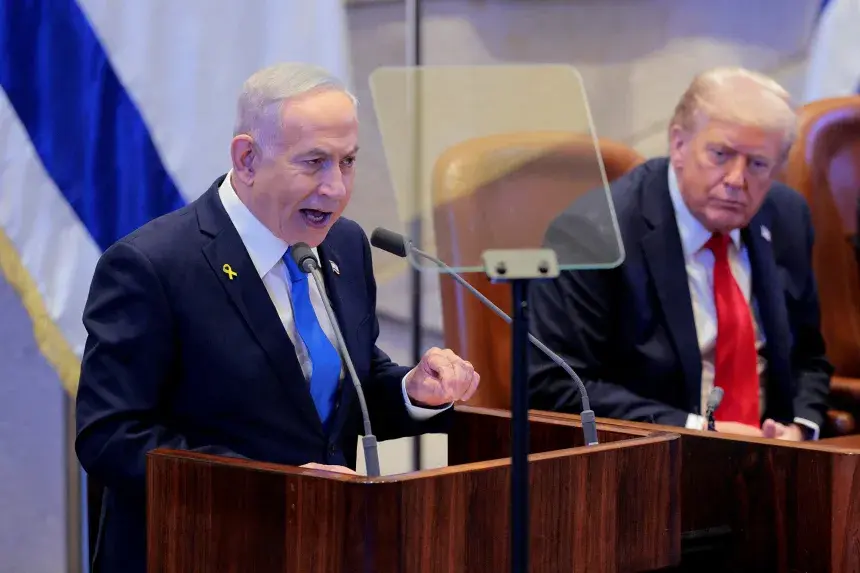
So what exactly was Trump’s contribution?
Observers describe it as “political pressure packaged as diplomacy.” Trump used public threats, social media statements, and private calls to push both sides toward agreement. When Hamas hesitated on hostage releases, he warned of “total annihilation.” When Israeli hardliners resisted, he hinted that U.S. aid and diplomatic cover could waver under his next term.
For better or worse, Trump’s style — brash, personal, unfiltered — changed the tone of the talks. “He doesn’t do subtle,” said one former State Department official. “But that’s sometimes what this region responds to.”
The Critics: “Peace at a Price”
Not everyone is celebrating.
Human rights groups warn that the ceasefire may be little more than a pause in the fighting. There’s still no comprehensive agreement on reconstruction, governance, or accountability for war crimes.
Trump’s earlier rhetoric — including talk of “relocating” Gazans and “flattening” Hamas — alarmed Palestinian officials and humanitarian organizations. Even some of his allies admit that his messaging, at times, has been reckless.
“He talks like a businessman, not a statesman,” said a former U.N. envoy. “That helps close deals, but it doesn’t build peace.”
Others worry that Trump’s involvement overshadows long-term diplomatic work by established mediators. “This isn’t about ego; it’s about stability,” said one European diplomat. “We need a process that survives beyond Trump’s press conferences.”
Inside the Ceasefire Deal
According to multiple reports, the ceasefire framework negotiated in October 2025 contains several key components:
Hostage and Prisoner Exchange – Israel will release several hundred Palestinian detainees in exchange for the release of remaining Israeli hostages held in Gaza.
Phased Israeli Withdrawal – Israeli forces will pull back from designated urban areas, allowing humanitarian agencies to operate.
Humanitarian Aid Corridor – Egypt and Qatar will coordinate aid deliveries under U.N. supervision.
Ceasefire Monitoring – An international observer mission, including U.S. and Arab representatives, will monitor compliance.
Talks on Governance – Over the next six months, negotiators are expected to establish a transitional council for Gaza’s civil administration.
It’s a blueprint, not a resolution. But after nearly two years of unrelenting war, even a temporary halt in violence feels monumental.
Trump’s Motives: Legacy, Leverage, and the Election
Why did Trump invest so much energy in this?
The simplest answer is legacy. During his first presidency, Trump prided himself on achieving the Abraham Accords — normalization deals between Israel and several Arab nations. A Gaza ceasefire offers him another chance to cement his reputation as a global “deal-maker.”
There’s also political timing. With a presidential election looming, Trump’s involvement in peace talks gives him foreign policy credentials — a domain where he’s often been criticized. At rallies, he’s already framing the ceasefire as proof that “peace through strength works.”
Finally, there’s the matter of leverage. Trump’s return to diplomacy reasserts his influence over a region that had started to move beyond him. By re-engaging, he’s reminded allies — and adversaries — that Washington’s future might soon look very different.
The Humanitarian Reality
For people in Gaza, politics is secondary. What matters is whether food, medicine, and water reach them before another bombing resumes.
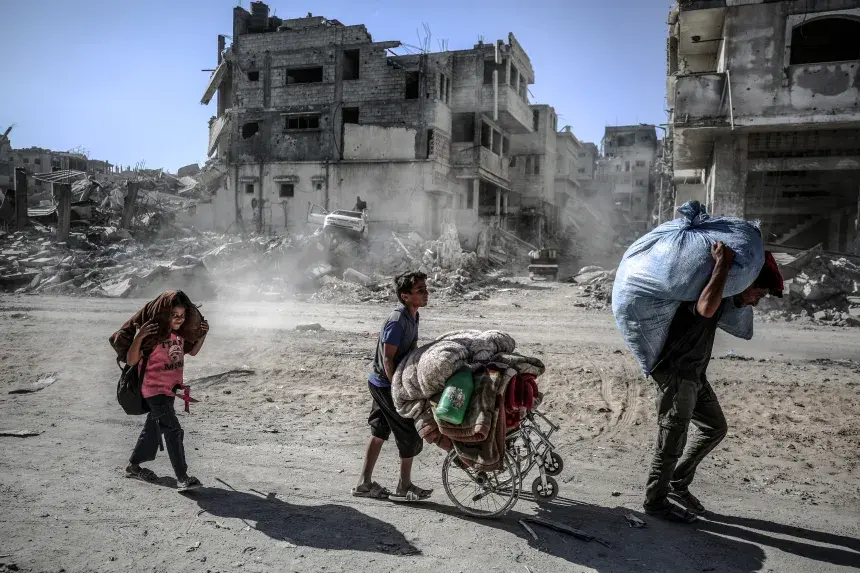
The ceasefire has allowed the first sustained influx of aid in months. Convoys from Egypt are crossing through Rafah under tight security. International agencies are setting up temporary shelters, and some displaced families are slowly returning to their neighborhoods — many of which are now piles of rubble.
Still, the situation is dire. Hospitals remain understaffed. Clean water is scarce. The United Nations warns that without a long-term peace deal, humanitarian progress could unravel overnight.
Trump has promised to “rebuild Gaza like never before,” though his plan — involving private American contractors — remains vague. Critics fear it could turn reconstruction into a political or commercial venture rather than a humanitarian mission.
Israel and Hamas: Uneasy Acceptance
Neither Israel nor Hamas appears fully satisfied with the ceasefire, which may be its most realistic feature.
For Israel, the deal halts a costly and politically divisive campaign. Prime Minister Netanyahu, facing domestic pressure and international scrutiny, can claim partial victory — hostages returning home, Hamas weakened, and U.S. support maintained.
For Hamas, the ceasefire offers survival. The group remains militarily diminished but politically relevant, able to frame the agreement as a defense of Gaza’s civilians and a temporary reprieve from destruction.
Trump’s plan skirts the deeper political question — what happens after the guns go silent? Who governs Gaza? Will elections ever return? Without answers, the risk of relapse remains high.
The Regional Picture
The ceasefire’s ripple effects extend beyond Gaza.
Egypt, Qatar, and Turkey — all deeply involved in the negotiations — have emerged as essential brokers, solidifying their regional influence. The Gulf states, wary of further instability, have cautiously supported the truce while preparing to finance parts of Gaza’s reconstruction.
Iran’s reaction has been muted but skeptical, accusing Trump of orchestrating a “temporary media stunt.” Meanwhile, European diplomats have cautiously welcomed the deal, emphasizing the need for international oversight.
For Arab publics, however, the ceasefire feels bittersweet: a necessary pause, but not justice. “It stops the killing,” one Jordanian analyst said. “But it doesn’t end the occupation.”
Fragility and the Road Ahead
Ceasefires in Gaza have a grim history. They begin with hope and end in recrimination. The pattern is so familiar that few dare to call this one “peace.”
Already, reports of minor violations have surfaced — gunfire near Khan Younis, drone activity over Rafah. Each incident tests the limits of the fragile agreement.
The next phase of negotiations will determine whether this truce evolves into something more enduring. Discussions over disarmament, governance, and security guarantees will be excruciatingly difficult.
If those talks fail, the region could slide back into the same cycle of violence that’s defined it for generations.
As one Israeli analyst put it, “Ceasefires are like holding your breath underwater. You can’t do it forever.”
A Deal, or Just a Pause?
Trump has already claimed victory, calling the Gaza ceasefire “one of the greatest deals ever made.” His critics, unsurprisingly, disagree.
Still, even those who dislike his style admit that he brought momentum at a moment of paralysis. “He made the impossible happen,” said one European mediator. “But the hard part — the peace — hasn’t even begun.”
The coming months will reveal whether Trump’s intervention becomes a historic breakthrough or just another flash in the endless loop of conflict and ceasefire.
For now, the skies over Gaza are quieter. Aid trucks move, children return to school, families bury their dead. And somewhere in Palm Beach, Donald Trump is likely watching the news, convinced that he alone made it so.