When Michael Archer II finally spoke publicly after his father’s passing, his words were brief — but they carried the weight of unimaginable grief.
“Please continue to keep me in your thoughts,” he said. “It’s not going to be easy, but one thing both my parents taught me was to be strong, and I intend to do just that.”
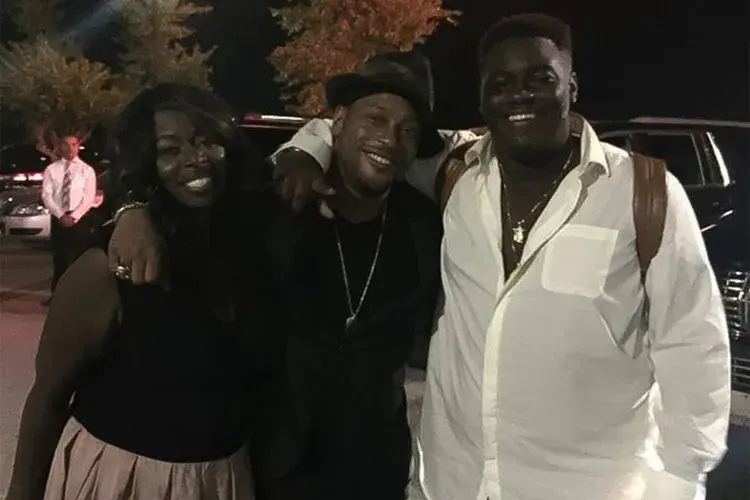
It was a simple statement, shared in the wake of a year that had taken everything from him. Within just seven months, Michael lost both of his parents — neo-soul icon D’Angelo and singer Angie Stone. Two legends. Two voices that shaped a generation. And for Michael, two anchors in his personal world suddenly gone.
A Double Tragedy
The first heartbreak came in March 2025, when Angie Stone, known for hits like “Wish I Didn’t Miss You” and “Brotha,” died in a car accident. Her passing shocked the music community. Tributes poured in from artists like Alicia Keys, Jill Scott, and Erykah Badu, who called her “one of the mothers of neo-soul.”
For Michael, she wasn’t just a music legend — she was “Mom.” She was warmth, faith, and the voice who cheered him through school recitals and football games.
Then, in October, tragedy struck again. D’Angelo — born Michael Eugene Archer — passed away at 51 after a private battle with pancreatic cancer. Fans had no idea he was sick; he’d quietly stepped back from the public eye for months.
When the news broke, the world mourned. But for Michael, it meant saying goodbye again — to his dad, his mentor, and his first hero.
Growing Up Between Two Musical Giants
Michael’s childhood was unlike most. His parents weren’t just musicians; they were pioneers of a new sound that blended soul, funk, gospel, and R&B.
Born to two artists in love with their craft, Michael spent his early years around recording studios, soundboards, and smoky rehearsal rooms. “Music was like the air we breathed,” he once said in a 2021 podcast interview. “If I woke up early, I’d hear my mom writing lyrics in the kitchen. If I stayed up late, I’d hear my dad working on chords in the basement.”
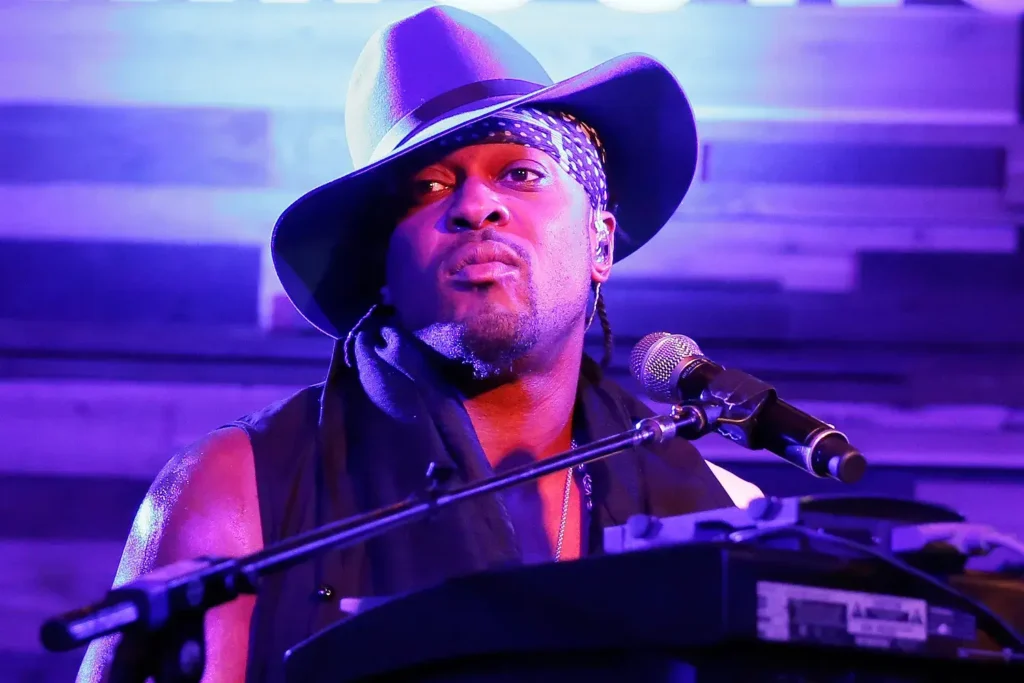
But the fame wasn’t always easy. D’Angelo, despite being one of the most gifted vocalists of his generation, was notoriously private and at times struggled with the pressures of stardom. After the meteoric success of Voodoo in 2000 — and that legendary “Untitled (How Does It Feel)” video — he withdrew from the spotlight for over a decade.
During that time, he focused on his son.
“My dad was quiet, but he always made time for me,” Michael shared in an old interview. “He didn’t talk about fame — he talked about soul. About staying real.”
His mother, on the other hand, was his constant motivator. “Mom pushed me,” he said. “If I wanted to quit something, she’d say, ‘No, baby, you finish what you start.’”
The Public Grieves, The Son Endures
When D’Angelo’s death was announced on October 14, 2025, tributes flooded social media. Jill Scott wrote, “He changed the way we heard love.” Tyler, the Creator called him “the backbone of soul in the 2000s.” Even younger artists like SZA and Daniel Caesar credited him as an influence.
But amid the thousands of posts and think pieces, Michael’s silence spoke the loudest — until he finally released his short message days later.
There was no PR polish, no grand speech — just a son trying to stay upright under the weight of loss. His words resonated precisely because they were raw, unguarded, and heartbreakingly human.
The Legacy He Inherits
It’s hard to overstate what D’Angelo meant to music. His debut Brown Sugar (1995) helped define neo-soul. His sophomore album Voodoo (2000) earned him Grammys and global fame. Then came Black Messiah (2014) — a politically charged, socially conscious masterpiece that reminded everyone why his voice mattered.
He was never interested in celebrity. He was interested in truth — in making music that healed, provoked, and grooved.
Now, that legacy belongs, in part, to his son.
Michael, who has dabbled in production and plays both piano and drums, faces the daunting task of preserving his father’s work while carving his own path. Insiders close to the family say he’s been quietly cataloging his father’s unreleased recordings, with the goal of releasing them “when the time feels right.”
“He wants to do it with integrity,” one source told Vibe. “He’s not rushing anything. He knows his dad’s music deserves care.”
Living in the Shadow of Greatness
Children of famous musicians often face a peculiar struggle: carrying the legacy without being consumed by it. For Michael, that tension is amplified — his parents weren’t just stars, they were innovators.
But those who know him describe him as grounded, soft-spoken, and thoughtful. “He’s not chasing fame,” says a family friend. “He’s trying to process life, to heal, and to make sense of all this loss.”
In private, Michael reportedly spends time revisiting old family videos — his dad laughing during studio sessions, his mom cooking on Sundays. “He said it reminds him that they were people first,” a cousin shared. “Not just legends, but his parents — two humans who loved him.”
A Year of Unthinkable Loss
Losing one parent is devastating. Losing both within months is unimaginable.
Mental-health experts say such compounded grief can leave lasting scars. “When you experience back-to-back losses,” grief counselor Dr. Robin Cutler explains, “your brain barely has time to process one before the next hits. It’s like trying to breathe underwater.”
Michael has reportedly leaned on close friends and extended family for support. He’s been seen attending grief counseling and visiting both parents’ graves regularly.
“Some days he’s okay,” one friend said. “Other days, the silence hits him hard.”
A Private Battle in a Public World
Grief is hard enough in private. Living it out under public scrutiny adds another layer of pain. Every headline, every tweet, every “breaking news” notification reopens the wound.
That’s why Michael’s decision to speak — even briefly — is significant. He didn’t owe anyone words. But he chose to share a glimpse of his heart, not for attention, but to honor his parents and acknowledge his pain.
He also reminded people that behind the celebrity stories and tributes is a son just trying to keep going.
“It’s not easy,” he said. “But they taught me to be strong.”
What Comes Next
So what’s next for Michael Archer II? No one knows for sure — and maybe that’s the point.
Friends say he’s taking time off social media, focusing on his mental health, and exploring ways to celebrate his parents’ legacy when he’s ready. Rumors suggest he may produce a documentary or foundation in their honor, though nothing has been confirmed.
“He’s always been introspective,” said one former bandmate of D’Angelo’s who watched Michael grow up. “If he ever shares something with the world, it’ll come from the same place his father made music from — honesty.”
The Music Lives On
In the weeks since D’Angelo’s passing, streams of Brown Sugar, Voodoo, and Black Messiah have surged. Vinyls have sold out across multiple record stores. On TikTok, younger fans have discovered his sound for the first time, sampling his riffs in lo-fi remixes and soulful tributes.
It’s proof that even in death, his influence continues to ripple.
Angie Stone’s catalog, too, has seen renewed appreciation. Fans have been revisiting her timeless ballads, finding comfort in her soulful wisdom.
Together, D’Angelo and Angie Stone’s stories form a rich tapestry of Black musical excellence — and their son now carries that legacy forward.
Finding Strength in the Silence
Grief doesn’t have a timeline. It doesn’t follow neat stages. It ebbs and flows — and sometimes, it just sits there quietly, asking for space.
For Michael, that space means honoring his parents the way they lived: through music, through soul, through strength.
People close to him say he still sits at the piano sometimes, just playing softly to himself. “He said that’s when he feels closest to them,” a friend shared. “When the chords line up, he swears he can still hear his dad humming.”
A Son’s Love, A Legacy’s Light
It’s hard to imagine the weight of Michael Archer II’s year. To lose both Angie Stone and D’Angelo — to say goodbye twice in seven months — is a burden few could carry. Yet his response has been marked not by bitterness, but quiet resilience.
He isn’t trying to replace his parents or rush his healing. He’s simply trying to live — to hold on to what they taught him: faith, truth, strength, and soul.
As fans revisit D’Angelo’s timeless music and Angie Stone’s uplifting anthems, one thing is clear: their spirit lives on through their art — and through their son.
“I miss them every day,” Michael reportedly told a family friend. “But they’re still with me. In every note, in every beat, in every breath.”
And maybe that’s the truest kind of legacy — not just fame or accolades, but love that endures long after the music fades.