When Kim Kardashian’s shapewear brand SKIMS unveiled its latest product — a thong covered in faux pubic hair — the internet did what it does best: completely lost its mind.

Within hours of the launch, the “Faux Hair Micro String Thong,” as it’s officially called, was all over social media. People were laughing, confused, horrified, and strangely fascinated. Some thought it was an April Fool’s joke (in October). Others rushed to buy one before it sold out. And just like that, Kim Kardashian had done it again — she broke the internet with underwear.
The Product Everyone’s Talking About
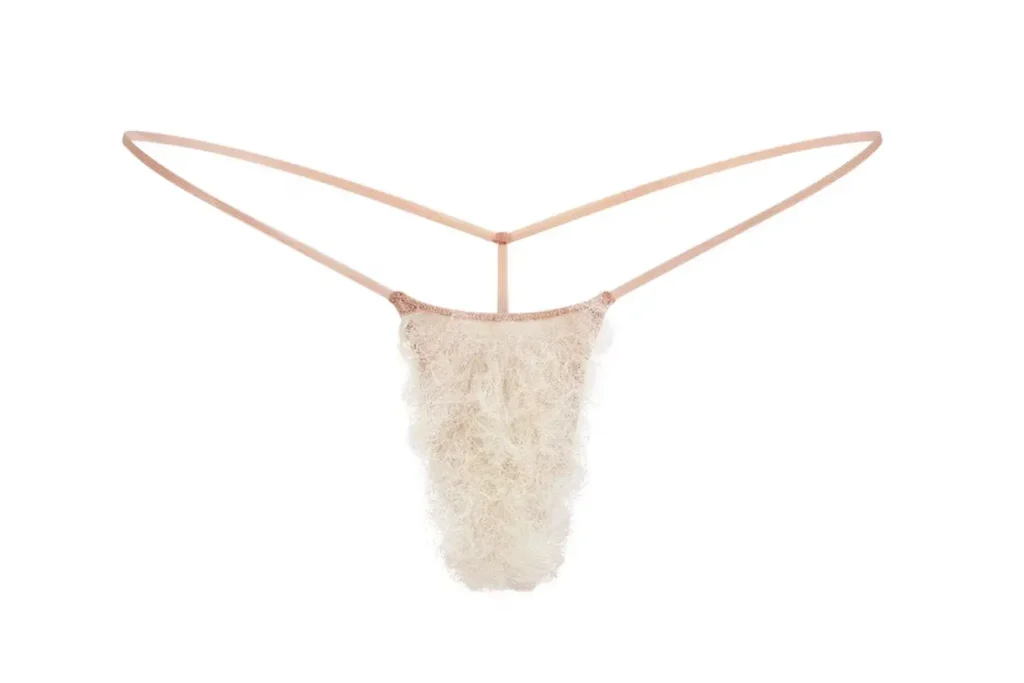
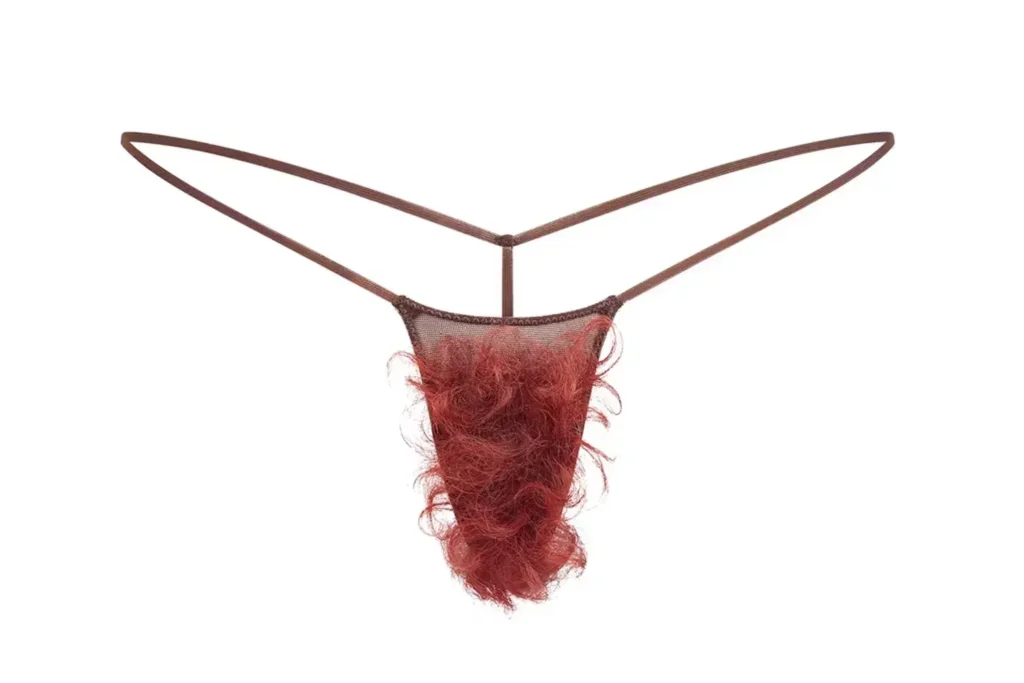
Let’s start with the basics: the thong in question is part of SKIMS’ new “Faux Hair Panty Collection.” It’s a tiny, sheer mesh thong with patches of synthetic hair attached to the front. It comes in 12 different shades — meaning there’s an option for just about every skin tone and hair color combination imaginable.
Retailing for $32, the piece was marketed as SKIMS’ “most daring panty ever.” The tagline? “With our daring new Faux Hair Panty, your carpet can be whatever color you want it to be.”
Yes, Kim and her team went there.
The launch video was styled like a cheesy 1970s game show, complete with bright lights, funky music, and a smiling host asking contestants that infamous line: “Does the carpet match the drapes?” It was equal parts camp, nostalgia, and chaos — a tongue-in-cheek nod to how obsessed pop culture has been with grooming standards for decades.
Within hours, the ad had gone viral. And so did the reactions.
“Who Asked for This?”: The Internet Reacts
The internet has seen its fair share of bizarre fashion moments, but this one hit differently. On X (formerly Twitter), TikTok, and Instagram, people could not stop talking about it.
Some found it hilarious:
“Kim has officially run out of ideas.”
“We’ve gone too far as a species.”
“This has to be a Saturday Night Live sketch.”
Others were intrigued — and maybe even a little impressed:
“Honestly? It’s kind of genius.”
“If you can’t grow it, buy it!”
“Is this feminist performance art or capitalism? Either way, I’m obsessed.”
And of course, there were those who didn’t know what to feel:
“I don’t know if I love this or need to sage my phone.”
Regardless of the tone, one thing was clear: everyone was talking about SKIMS.
By the next day, the thong had reportedly sold out online, proving once again that controversy might just be the best marketing tool in the world.
SKIMS and the Art of Going Viral
If you’ve followed SKIMS for a while, this shouldn’t come as a total surprise. Since its launch in 2019, Kim Kardashian’s shapewear empire has built a reputation for being body-inclusive, minimalist, and relentlessly viral.
There was the “nipple bra” that made headlines for its lifelike protrusions, the metallic swimwear line that looked like it came straight from a sci-fi movie, and countless campaigns that blurred the line between avant-garde and absurd.
Every time SKIMS releases something new, it’s not just selling a product — it’s selling a moment.
The faux pubic hair thong fits perfectly into that playbook. It’s provocative, funny, slightly uncomfortable, and impossible to ignore. It turns underwear into a conversation starter, which is something most brands would kill for.
Why Pubic Hair? Why Now?
At first glance, this drop might seem like pure shock value. But beneath the laughter and the memes, there’s actually a deeper cultural layer here — one that has everything to do with how we view body hair.
For decades, women have been told that “smooth” equals “sexy.” Waxing, shaving, laser hair removal — these have all been marketed as basic hygiene rather than personal choice. The beauty industry has made billions off the idea that body hair (especially pubic hair) is something to be removed, hidden, or ashamed of.
In that context, a thong covered in fake pubic hair feels almost rebellious — even satirical. It’s like Kim Kardashian and her team are holding up a mirror and saying, You wanted smooth? We’re giving you the opposite.
Is it empowerment? Is it mockery? Maybe a bit of both.
The brand has framed it as playful, body-positive, and inclusive. But some critics argue it’s more of a gimmick than a genuine statement about liberation. After all, it’s still a $32 piece of underwear designed to go viral — not a manifesto.
Still, the fact that people are even debating it says something.
The Fashion World Has Been Here Before
Believe it or not, this isn’t the first time “faux pubic hair” has made its way into fashion.
Back in the 1600s, prostitutes in Europe reportedly wore merkins — small wigs for the pubic area — for hygiene reasons or to cover up after shaving. In more modern times, the merkin made a comeback on the runway.
Designers like John Galliano and Maison Margiela have incorporated pubic wigs and hair textures into couture pieces, using them to question beauty standards and modesty. Those high-fashion statements often made headlines for being “bold” or “artistic,” even though very few people would ever actually wear them.
What makes SKIMS’ move different is accessibility. It’s not a museum piece or a runway fantasy — it’s something you can buy with a few clicks. In a way, Kim has taken the once-elitist world of avant-garde fashion and dropped it straight into the mainstream underwear drawer.
The Feminist Question
Of course, whenever Kim Kardashian releases something that touches on body image, the feminist debate follows.
Some argue that SKIMS is reclaiming body hair — turning something once taboo into a playful, visible fashion statement. Others see it as commodifying empowerment — taking a feminist talking point and wrapping it in marketing gloss to sell more underwear.
It’s a tricky line.
On one hand, Kim’s products often promote inclusivity and body diversity. On the other, they sometimes lean into spectacle. The faux hair thong could be interpreted as either a cheeky nod to body positivity or a parody of it.
As one TikTok user put it:
“Is this about normalizing hair or just trolling us all?”