The world of rock has lost one of its true originals.
Ace Frehley, the guitarist whose smoky solos, space-age persona, and offbeat humor helped make Kiss one of the most theatrical bands in history, died Thursday at his home in Morristown, New Jersey. He was 74 years old.
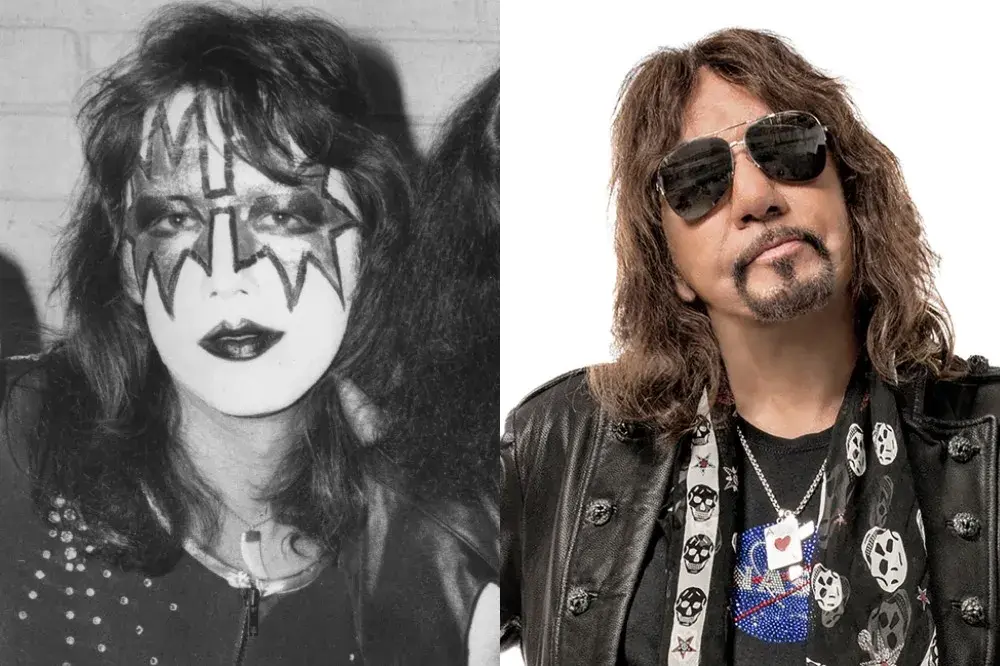
Frehley’s family confirmed the news in a statement, saying he passed away peacefully surrounded by loved ones. The cause of death followed complications from a fall last month that left him hospitalized with serious head injuries music techchaok.
For fans who grew up with Kiss posters on their walls and Frehley’s riffs rattling their speakers, it feels like the end of an era — a farewell to the man who made guitars smoke, literally, and whose swagger and sound shaped generations of players.
From the Bronx to the Big Stage
Born Paul Daniel Frehley on April 27, 1951, in the Bronx, Ace grew up in a working-class family where money was tight but music was constant. His father played accordion, and the family’s tiny apartment was always filled with sound — everything from doo-wop to Chuck Berry.
Ace wasn’t the most disciplined kid. He dropped out of high school, bounced around odd jobs, and ran with street gangs for a while. But everything changed when he picked up a guitar at 13. “It was like lightning,” he once said. “From the first chord, I knew that was what I was meant to do.”
In the late 1960s and early ’70s, Frehley floated through a handful of New York bands, playing clubs and dives while developing the distinctive tone and stage presence that would soon make him famous. In 1973, after spotting a newspaper ad that read “Lead guitarist wanted for a theatrical rock band,” he showed up to audition wearing mismatched sneakers — one red, one orange. That audition led him straight into rock history.
Becoming “Space Ace”
With Gene Simmons, Paul Stanley, and Peter Criss, Frehley co-founded Kiss, the band that redefined spectacle in rock. When they created their alter egos, Ace became The Spaceman — silver makeup, platform boots, and a guitar that could shoot sparks and smoke.
It wasn’t just an image. Frehley’s playing gave Kiss their edge. His solos had melody and attitude — sharp enough to slice through arena noise yet catchy enough to hum the next morning. On songs like “Cold Gin,” “Parasite,” and “Shock Me,” he blended bluesy phrasing with cosmic flair.
“Shock Me” was especially personal. It was inspired by the night he nearly electrocuted himself on stage. “Most people would take a break after that,” Paul Stanley joked years later. “Ace wrote a song about it.”
Kiss’s mix of raw sound and outrageous theater turned them into one of the biggest acts of the 1970s. Their 1975 live album Alive! became a rock classic, and their concerts looked like sci-fi explosions set to guitar thunder. At the center of it all, Ace was grinning, smoking guitar in hand, every inch the rock alien he pretended to be.
Flying Solo: “New York Groove” and Beyond
In 1978, each Kiss member released a solo album simultaneously — an idea that could’ve been a disaster. But Ace Frehley’s self-titled record surprised everyone, soaring on the strength of “New York Groove,” a swaggering, glittery anthem to his hometown.
The song became a hit and reminded fans that behind the makeup was a real musician with his own voice. Even decades later, that riff — simple, bold, and instantly recognizable — remains one of the most enduring moments of late-’70s rock.
But fame came with friction. As Kiss grew larger than life, internal tensions grew too. Frehley often clashed with Simmons and Stanley over control and direction. He also struggled with the darker side of success — alcohol, drugs, and the endless touring grind.
In 1982, exhausted and disillusioned, Ace walked away from Kiss. It wouldn’t be the last time he left, but it was the first time he truly tried to find himself outside the makeup.
Frehley’s Comet and Life After Kiss
Leaving one of the biggest bands on earth could have buried a lesser artist. Instead, Ace started fresh. His new project, Frehley’s Comet, launched in the mid-’80s and gave him a platform to experiment and reconnect with fans.
Their 1987 debut album blended his signature sound with the sleek production of the era. Songs like “Rock Soldiers” and “Into the Night” carried his rebellious energy forward, even as musical fashions changed.
Though Frehley’s solo career never reached Kiss-level superstardom, it built a loyal following. He wasn’t trying to compete anymore — he was just playing what he loved. Over the next decades he released a steady stream of albums, including Anomaly (2009), Space Invader (2014), Origins Vol. 1 (2016), and his final record, 10,000 Volts, in 2024.
Each one felt like a love letter to the kind of rock he grew up on — loud, honest, and a little weird.
The Reunion Years
In 1996, Kiss shocked the world again by announcing a reunion of the original lineup — makeup, costumes, and all. For millions of fans who had grown up on the myth, seeing the real four back together was like a dream come true.
The reunion tour was one of the highest-grossing in history, and for a few years, it seemed like old wounds had healed. Frehley contributed to the 1998 album Psycho Circus and played massive stadiums again. But the old tensions eventually resurfaced, and by 2002, Ace was gone once more.
Still, his mark on Kiss was permanent. Whether or not he was in the lineup, no guitarist who followed ever fully captured that Ace Frehley magic — the space-age humor, the bluesy swagger, the sly grin that said he was having the time of his life.
In September 2025, Frehley reportedly fell in his home studio while preparing for a new tour. The injury was serious, and he was hospitalized for several weeks. When the news broke, fans around the world flooded social media with messages of concern, hoping their hero would pull through one more time.
But on October 16, surrounded by family and longtime friends, Ace Frehley passed away. His wife, Lara, said in a statement that he “went out peacefully, listening to the music he loved.”
He was the first of the four original Kiss members to die.
A Global Wave of Tributes
Within hours, tributes poured in from across the music world.
“An irreplaceable rock soldier,” wrote Gene Simmons on social media. “Without Ace, there is no Kiss.”
Paul Stanley called him “a brother in sound and spirit,” saying, “He gave the world riffs that will outlive us all.”
Peter Criss, the band’s original drummer, said he and his wife were with Ace during his final hours. “He was still cracking jokes,” Criss shared. “That was Ace — funny, fearless, and loud until the end.”
Younger artists — from Dave Grohl to Slash — also paid homage. “Every kid who’s ever lit up a guitar solo in front of a mirror owes something to Ace Frehley,” Grohl posted.
At Kiss tribute nights around the world, fans painted silver stars on their faces and raised guitars in silent salute.
What Made Ace Different
Technically, Frehley wasn’t the flashiest guitarist in rock. But he didn’t have to be. His playing was about feel — those perfectly bent notes, the gritty tone, the way every solo told a little story. He could make a Les Paul sound like it was taking off into orbit.
His stage presence was another story entirely. When that smoking guitar started sparking, the audience went wild. It was equal parts music, theater, and mischief — a performance style that helped define Kiss’s identity and inspired decades of rock spectacle.
And yet, offstage, Ace was famously down-to-earth. Friends say he was funny, self-deprecating, and loved nothing more than jamming with young musicians. “He never lost that Bronx kid in him,” one former bandmate recalled. “He’d show up late, crack a joke, then play a solo that melted the room.”
The Struggles Behind the Starlight
Behind the makeup and laughter, Ace fought hard battles — with addiction, depression, and self-doubt. He was open about his drinking and drug use, especially in his candid 2011 memoir No Regrets: A Rock ’n’ Roll Memoir.
In it, he wrote:
“I’ve made every mistake a musician can make. But I’m still here, and somehow, people still care. Maybe that’s the real miracle.”
He spent his later years sober, reflective, and grateful. In interviews, he spoke about faith, family, and the fans who never abandoned him. “They saved my life more than once,” he admitted in a 2024 interview. “When you’re Ace Frehley, people expect sparks — but what they don’t see is the heart underneath.”
Lasting Legacy
Ace Frehley’s influence runs deep. You can hear echoes of his tone in bands from Guns N’ Roses to Foo Fighters, from The Darkness to Ghost. His blend of melody and attitude helped shape modern rock guitar — not through sheer speed, but through personality.
He was inducted into the Rock & Roll Hall of Fame with Kiss in 2014, a long-overdue honor that brought the original members together one last time on stage. True to form, Ace cracked jokes through most of his speech, then ended with a grin:
“I was just a kid from the Bronx who liked loud guitars. Not bad, huh?”
For the millions who grew up believing in rock’s loud, weird dream, Ace Frehley was proof that you could be both larger than life and unmistakably yourself.
Saying Goodbye to Space Ace
Ace Frehley’s story is a wild one — a Bronx kid who became a spaceman, a rock star who became a legend, and a legend who never stopped laughing at the absurdity of it all.
He once said, “I used to think I was from another planet. Turns out I’m just from New York — but man, it’s been a hell of a trip.”
Now that trip has ended, but the echoes remain: the riffs, the laughter, the light shows, and the eternal invitation to turn the volume up just a little higher.
As the lights dim and the final feedback fades, one thing’s for certain — the stars just got a little louder tonight.