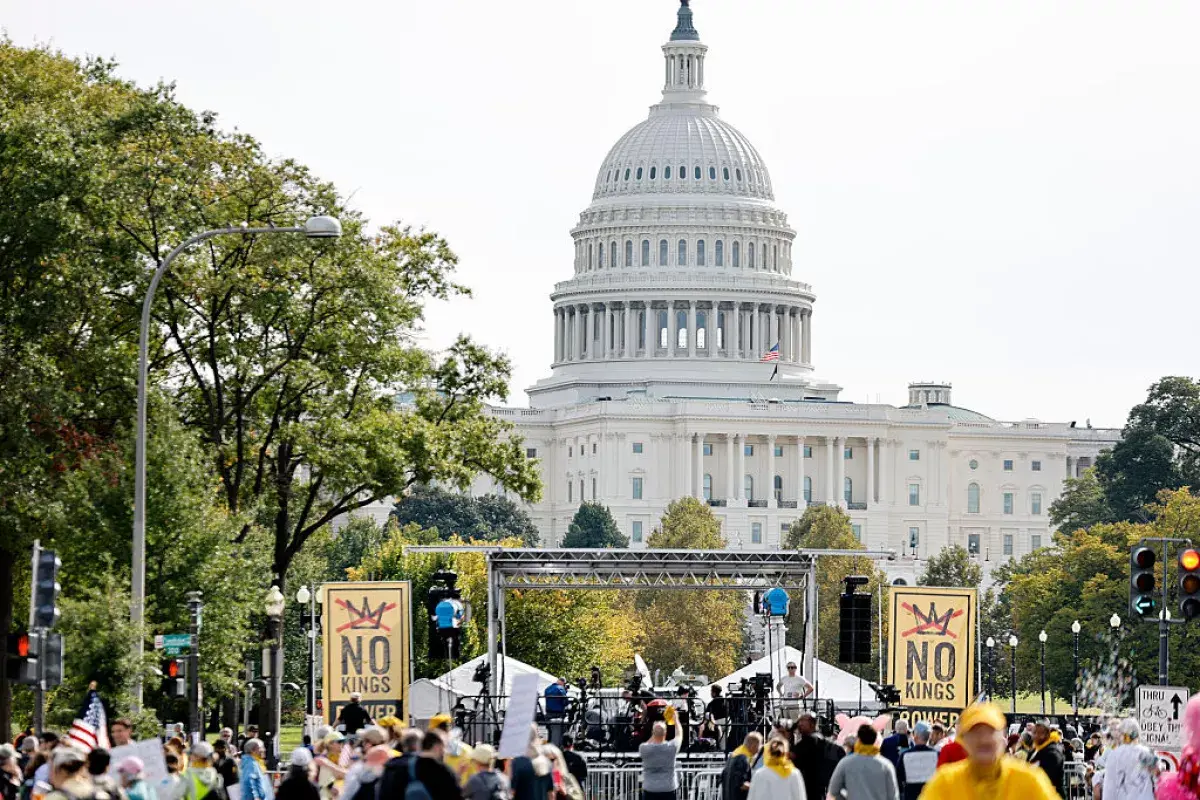
A Movement in Motion
The backdrop? The second major nationwide mobilization of this movement (the first being June 14, 2025).
Takeaway 1: Scale + Spread = A New Baseline
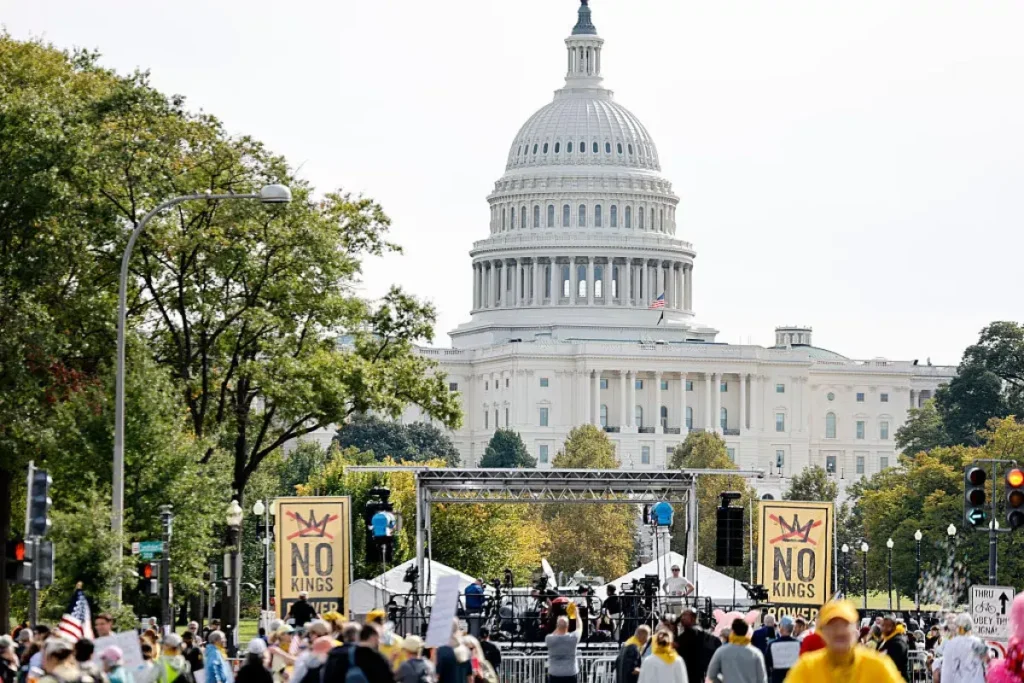
One clear takeaway is the sheer scale and geographic spread of these protests.
Organizers reported over 2,600 events across all 50 states.
Some estimates and organizer claims put participation at more than 7 million people for the day.
Why this matters
For a protest movement to matter, numbers matter: scale draws attention, media coverage, political pressure. When millions show up in thousands of towns, it sends a message.
For example: small towns in Michigan held “No Kings” rallies too
Limitations & caveats
Organizer claims often exceed media-verified counts; e.g., “7 million” is a big number but still requires independent verification.
Scale by itself doesn’t guarantee sustained impact—mobilizing is one thing; organizing, follow-through and political leverage is another.
What the day showed
In major cities like New York and Washington, large crowds, vibrant visuals, mass street presence.
In smaller settings, local communities showed up and made the protest “real” beyond the national narrative.
The movement signalled it has the logistical capacity to mobilize at scale.
It revealed that opposition to perceived executive overreach is no longer niche—it’s entering mainstream protest culture.
Takeaway 2: One Movement, Many Grievances – But a Unifying Metaphor
A second takeaway: the movement brings together diverse grievances, yet uses the single metaphor of “No Kings” to unify them.
The metaphor
The slogan “No Thrones. No Crowns. No Kings.” leaps out.
By framing protests under this metaphor, organizers give varied causes a shared banner.
The grievances
Protesters voiced concerns over:
Civil-liberties: free speech, protest rights, dissent being stifled.
For example, one marcher in New York cited health insurance fears.
Why this matters
The metaphor gives a narrative frame. Instead of many unconnected protests, they are tied by the idea “we won’t have kings in America.”
Limitations & risk
Opponents can accuse the movement of lack of clarity or being purely symbolic rather than actionable.
What the day showed
At multiple sites, speeches and signs highlighted different issues, yet all connected back to the core message.
There was a clear effort at peaceful messaging and non-violent tactics (organizers emphasised de-escalation, training volunteers).
The visual and cultural dimension (costumes, yellow symbolism, banners) showed the movement understands how to create mass presence and imagery.
Takeaway 3: The Political Undercurrents & What Comes Next
The third takeaway focuses on political dynamics and what this movement means for the near future.
Political responses and significance.
Republicans responded with varying tones: some strong condemnations, others silence. For instance, GOP leaders labelled the movement a “hate America” rally.
The movement happened amid a government shutdown and tensions between the executive branch and Congress. Protests like this reflect not just policy grievances but deeper institutional anxieties.
What comes next? Possible futures
Mobilization into electoral engagement: The next step for many participants will likely be local elections, midterms, community organizing. This day might serve as a catalyst.
Resistance and backlash: The movement is visible, and visible movements often generate counter-movements. Political opponents may seek to marginalize the “No Kings” message or portray it as radical.
Movement building vs. spectacle: The day was spectacular—but building structures (local chapters, sustained organising) will determine lasting impact.
Why this matters
Big protest days can shift narratives, media frames and public discourse. This event may mark a turning point in how Americans view executive power and protest.
For politicians and policymakers, ignoring such a large-scale mobilization would be risky. Whether they respond with reforms, ignore it, or repress it will shape future trajectories.
Risks & potential pitfalls
Without follow-through, this could become a flashpoint rather than a flash movement. Meaning: a big day but no long-term structure.
Fragmentation: Diverse grievances mean building consensus on the next steps may be hard. Some may prefer activism, others electoral work, others policy change—aligning all will be challenging.
Backlash: Opponents may exploit videos of disorder, claim protestors support extreme ideologies, or push a narrative of “law and order.” Media framing will matter.
What the day revealed about the future
Protest was not limited to big coastal cities – small towns, suburbs, mid‐America participated. That suggests the movement is not purely urban.
Organizers emphasised non-violence, de-escalation, training volunteers—this suggests a sophistication beyond spontaneous activism.
However, isolated incidents (arrests, clashes) show the day is not risk-free—and opponents will use those moments for critique. For example, in Illinois and Portland there were arrests and confrontations.
Human Faces, Voices & Moments
To make these takeaways real, consider some vivid moments and voices from the day:

What This Means for Democracy
The “No Kings” day holds broader significance for how Americans think about democracy and power.
Civic vitality: In a moment when many worry about low civic engagement, this event suggests people still care, still mobilise.
Institutional check: Protest politics serve as a check on power. When large numbers mobilise, institutions must respond—legislatures, courts, media, all feel the pressure.
But by the same token, it also raises questions:
Will the movement translate into concrete institutional change, or simply linger as a moment?
How will elected officials respond—through reform, dismissal, repression?
How will opposition portray it and evolve their strategy?
Can a movement this broad stay coherent in terms of strategy and goals?
It was more than a march—it was a statement: We are watching. We are present. We’ll gather when we feel our democratic system is threatened.The power belongs to the people.”
Would