
A Real-World Look at How the AI + IoT Combo Is Changing Everything
For years, the Internet of Things (IoT) has been quietly growing around us. Little by little, more devices started connecting—wearables, smart lights, sensors in factories, cameras on streets, and machines in hospitals. But for all the hype, IoT always had one big weakness: it collected mountains of data but didn’t really know what to do with it.
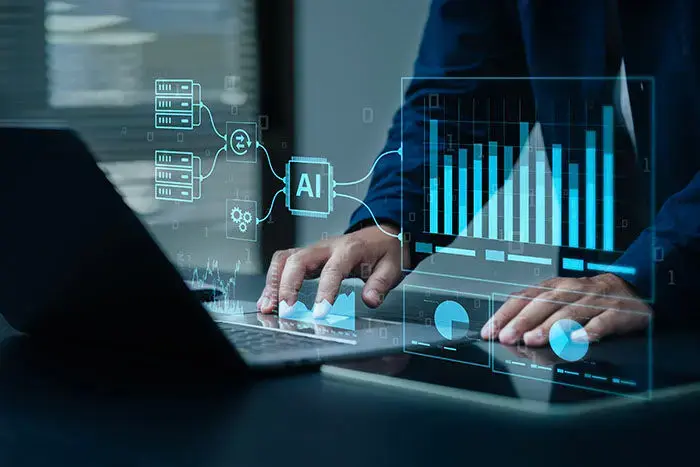
That’s where artificial intelligence steps in, and honestly, it changes everything.
AI takes IoT from simply “collecting info” to actually understanding it, predicting outcomes, and making decisions in real time. Because of this, the demand for IoT solutions is exploding across industries. And the capabilities unlocked by combining AI with IoT are genuinely redefining what’s possible.
This article breaks down, in a very human way, why AI is boosting IoT adoption, how it’s transforming different industries, and where this powerful combination is heading.
Why AI Has Become the Spark IoT Always Needed
For the longest time, IoT felt like a half-finished idea. Sensors and devices collected tons of data—but most of it just sat in cloud storage, unprocessed or massively underutilized.
Early IoT was like having cameras everywhere but no one watching
Devices could:
record temperatures
count footsteps
measure energy usage
track machine performance
But they couldn’t understand what any of it meant. Humans still had to sift through reports or dashboards and interpret everything manually. It was helpful, but not game-changing.
AI gives IoT actual “brains”
Once AI entered the picture, IoT transformed overnight. Suddenly devices could:
recognize patterns
spot anomalies
predict events
make decisions
automate responses
And because AI models can learn over time, IoT systems keep getting smarter without human involvement.
This shift—from passive data collection to intelligent decision-making—is exactly why IoT demand is skyrocketing today.
What’s Driving the Surge in AI-Powered IoT Demand
Let’s talk about why businesses, industries, and governments are rapidly adopting AI-IoT systems.
1. Companies want insights, not just data
Organizations don’t want another pile of spreadsheets. They want:
predictions
alerts
recommendations
automated actions
AI turns IoT data into something useful. For example, instead of simply reporting that a machine is overheating, an AI-IoT system can tell you:
why it’s happening
how serious the issue is
when it will fail
what to fix
That’s real value.
2. Edge AI makes IoT faster and smarter
One of the biggest breakthroughs has been edge computing, where the “thinking” happens on the device itself—not in a faraway cloud server.
This makes everything:
fastert
more secure
more reliable
more autonomous
Think of self-driving cars, robots, or operating rooms—cloud delays are unacceptable. With edge AI, IoT devices can act instantly.
3. Automation is now a necessity, not a luxury
Workforces are shrinking, costs are rising, and industries need more precision than ever. AI-IoT systems help automate:
quality control
logistics
manufacturing
energy management
security
customer service
Automating even half of these processes can save companies millions.
4. AI dramatically cuts operational costs
Predictive maintenance alone—made possible by AI + IoT—saves industries worldwide billions of dollars per year. Instead of waiting for machines to break, AI predicts failures early and prevents downtime.
And since downtime is one of the most expensive problems in any industry, businesses are rushing to adopt AI-IoT systems.
5. Improved accuracy and reliability
AI enhances IoT sensors by giving them the ability to:
understand context
combine data from multiple sources
filter out noise
adapt over time
This makes connected systems smarter and more dependable.
New Capabilities Unlocked by the AI + IoT Combination
AI doesn’t just improve IoT—it expands its potential in ways that were never possible before.
Here are the most significant capabilities unlocked by this powerful pairing:
1. Predictive Maintenance and Zero Downtime
This is arguably the biggest game-changer.
IoT devices monitor machines all day long. AI then analyzes that data and predicts:
when a part is going to break
what’s causing the issue
how long the machine has left
what maintenance is needed
This prevents millions of dollars in lost productivity and stops failures before they occur.
2. Hyper-Automation in Workplaces
Thanks to AI, IoT now powers entire automated ecosystems. For example:
Robots adjust their own speed based on real-time conditions
Buildings automatically manage lighting and HVAC
Farms water themselves based on soil analytics
Factories optimize production without human input
This is the future of work—smart, automated, and efficient.
3. Smarter Smart Homes
AI makes smart homes feel more natural and personalized.
Homes can now:
learn your habits
adjust temperatures automatically
predict appliance failures
detect intruders with advanced vision AI
save energy without effort
Instead of tapping an app just to turn on a light, your home becomes a living, learning environment.
4. Healthcare Monitoring With Real Intelligence
AI-powered wearables and sensors can now:
detect heart abnormalities
monitor sleep patterns
identify early symptoms
track chronic conditions
alert doctors in real time
This kind of remote, intelligent monitoring is especially crucial for seniors and patients with chronic illnesses.
5. Smart Cities That Manage Themselves
AI-IoT systems can help entire cities run more smoothly by enabling:
intelligent traffic lights
better waste management
improved water systems
energy-optimized street lighting
crime detection using AI-powered cameras
tal monitoring
Cities become cleaner, safer, and more efficient.
6. Supply Chain and Logistics Reinvented
AI-IoT enables supply chains to run with almost no human oversight.
Here’s what becomes possible:
live tracking of shipments
automated warehouse robots
demand forecasting
route optimization
cold chain monitoring
reduced fuel consumption
Packages move faster, inventory stays balanced, and waste drops significantly.
7. Factories That Manage Their Own Operations
AI-powered IoT is the backbone of Industry 4.0.
Factories equipped with this combination can:
detect defects using computer vision
simulate production lines through digital twins
adjust equipment settings automatically
optimize energy usage
track performance in real time
It’s manufacturing—but smarter, safer, and faster.
8. Modern Security and Surveillance
Instead of humans watching camera feeds, AI-IoT systems can:
detect suspicious behavior
recognize faces
spot anomalies instantly
send alerts
track unauthorized access
This makes security more proactive and far less dependent on manual monitoring.
9. Smarter Energy Management and Sustainability
AI-IoT helps both households and industries become more eco-friendly.
Some capabilities include:
smart meters that adjust consumption
automated grid balancing
identifying energy waste
predicting peak usage times
optimizing solar and wind energy
This is essential as countries shift toward renewable energy.
10. The Foundation of Autonomous Vehicles
Self-driving cars, drones, and robots depend on IoT sensors and AI models working together.
IoT gathers information like:
distance
movement
obstacles
road conditions
AI then analyzes it instantly to make decisions. Without IoT, AI has no “eyes”—and without AI, IoT has no “brains.”
Challenges We Still Need to Address
Despite the massive potential, AI-powered IoT faces real challenges:
1. Security and privacy risks
More devices means more vulnerable entry points.
2. High setup costs
Small businesses sometimes struggle with the initial investment.
3. Integration complexity
Connecting old systems to modern AI-IoT platforms isn’t always easy.
4. Ethical concerns
Who controls the data? How do we prevent bias in AI decisions? These questions need clear answers.
The Future of AI + IoT: Even Smarter, Even More Autonomous
Looking ahead, AI-powered IoT will unlock even more impressive capabilities:
self-healing networks that repair themselves
fully autonomous factories
IoT-enabled biotech with microscopic sensors
AI that learns from entire ecosystems, not just individual devices
cities that adjust automatically to population flow
hyper-personalized digital environments
We’re heading into a world where connected devices won’t just respond—they’ll anticipate, adapt, and evolve.
AI Isn’t Just Boosting IoT — It’s Finally Bringing It to Life
IoT always had potential, but AI is the force that brings that potential to life. Together, they reshape industries, modernize cities, transform healthcare, and simplify everyday life.
The truth is simple:
IoT provides data.
AI provides intelligence.
Together, they create a new era of smart, autonomous systems.
We’re no longer living in the era of the “Internet of Things.”
We’re entering the age of the Intelligence of Things—a world where devices don’t just connect, they think.



kxoxjugleizdxtnhofhmpwudsrpnfr