
In a country where hope has been stretched thin, where families live scattered across continents, and where politics often feels like an endless cycle of promises and disappointment, a single sentence has shaken the national mood:
“I will return — win or lose.”
Those six words from Maria Corina Machado, Venezuela’s most prominent opposition leader, have spread across social media, radio stations, What Sapp groups, and living rooms from Caracas to Madrid.
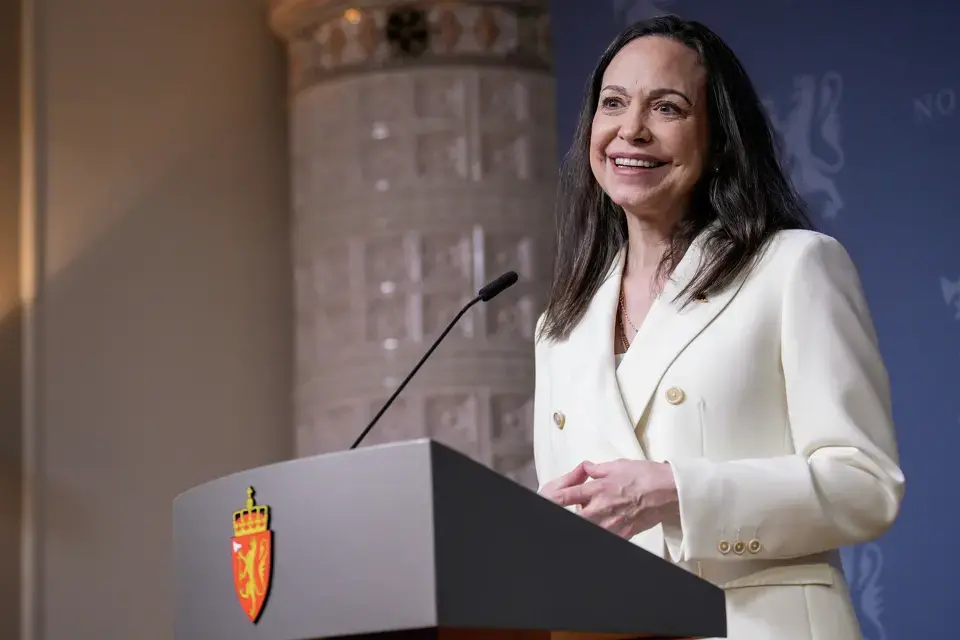
This is not the first time a Venezuelan politician has vowed to fight. But it may be the first time in years that someone has said it with this level of clarity, defiance, and vulnerability — at a moment when the country stands at yet another breaking point big news .
This is the story behind her promise, the lives it touches, the risks it carries, and what it might mean for the future of Venezuela.
A Leader Formed in Fire
Maria Corina Machado didn’t emerge from nowhere. Long before she became a global headline, she was a Venezuelan citizen living through all the same storms the country faced. But unlike many who eventually chose silence, exile, or compromise, she moved in the opposite direction.
Raised in a wealthy family, she could have chosen safety. Instead, she chose confrontation — publicly opposing Hugo Chávez in the early 2000s, building a reform movement, and becoming one of the few consistent voices saying what millions whispered privately.
Over the years, she faced:
- Removal from parliament
- Accusations she calls false
- Threats
- Bans on running for office
- Waves of propaganda
- Pressure to leave the country
But she stayed. Over time, she became something more than a politician — she became a symbol of stubborn resistance.
So when she won the 2023 opposition primaries by a huge margin, it wasn’t just an electoral victory. It was a message from Venezuelans:
“We still believe in something.”
Yet, her disqualification from running in official elections made her role even more complicated and emotionally charged. Her vow to return is her latest — and perhaps strongest — form of defiance.
Why Her Promise Hit So Hard
Politicians vow things every day. So why has this one promise echoed so strongly, inside and outside Venezuela?
1. Because people are exhausted
Venezuelans have endured things no nation should carry alone:
- Salaries that barely cover food
- Hospitals without basic medicine
- Kids growing up without parents because families migrated
- Aging parents left behind with little care
- Neighborhoods where power goes out for hours, even days
- A sense of life being paused, indefinitely
When someone says, “I will come back,” in a country where millions wish they could return, the words land differently.
2. Because it is an act of courage
Machado faces real danger. Many opponents before her were jailed, silenced, or pushed into exile. Her promise is not political theater — it carries real personal risk.
3. Because she said she’ll return even if she loses
In a political climate where leaders vanish when things don’t go their way, a pledge to return regardless of outcome feels rare — even refreshing.
4. Because it feels personal, not strategic
She didn’t say it for applause. She said it like someone speaking to a country she loves, even if that love has become painful.
What Ordinary Venezuelans Say
For people inside Venezuela, Machado’s words hit differently depending on their reality.
In a bakery line in Mérida
“I don’t know if she can really change anything,” a 53-year-old man says. “But when she said she will return no matter what, it reminded me that we are not alone.”
In a bus station in Barinas
A young woman heading to Colombia shakes her head: “I want to stay… but I can’t. If she’s brave enough to come back, maybe someday I can too.”
In a classroom in Caracas
A teacher smiles sadly: “We don’t want heroes. We want our lives back. Still… her words gave me a little hope.”
The human reaction to Machado’s vow reveals what years of political and economic crisis have done: Venezuelans are afraid to believe, yet longing for something to hold on to.
What Her Return Risks
Machado isn’t naive. She knows the price of standing on Venezuelan soil again may be high. Past opposition figures faced:
- House arrest
- Travel bans
- Court cases
- Constant surveillance
- Intimidation
- Physical risk
She knows that stepping off that plane would put her on a collision course with a government that has worked for years to limit her influence.
Her vow essentially says:
“Even knowing all this… I am coming.”
That is why it resonates. It is not just politics. It is courage mixed with desperation — a tone many Venezuelans understand deeply.
What the Madura Government Might Do
President Nicolas Madura now faces a dilemma, and none of his options are without consequences.
Option 1: Allow her to return peacefully
This would make him appear tolerant, but would energize her base.
Option 2: Block or arrest her
This could spark international condemnation, protests, and perhaps even violence.
Option 3: Pretend not to care
This avoids confrontation, but risks making her appear even stronger.
Every move carries political weight. Every silence carries meaning.
Why Her Promise Scares the Government
Machado is not just another critic.
Governments can silence candidates.
It is much harder to silence symbols.
A Country Torn Between Fear and Hope
Venezuelans today live in a strange emotional place.
Machado’s vow forces them to confront all these emotions at once.
It asks them:
- Do you still believe in your country?
- Do you still believe in democracy?
- Do you still believe in coming home?
These are not easy questions for a nation broken by migration, inflation, loneliness, and loss.
A Possible New Beginning
A Machado victory — or even partial political success — could begin a long process of recovery:
Rebuilding institutions
Courts, elections, and checks on power.
Economic stabilization
Oil industry rebuilds, currency reforms, foreign investment.
Humanitarian relief
Food, medicine, and rebuilding hospitals.
Reuniting families
Millions of Venezuelans abroad may consider returning.
But even victory would not bring instant solutions. Venezuela’s wounds run deep. The process would take years — maybe a generation.
If She Loses: The Fight Continues
This is the heart of her vow.
Loss does not end the movement — it only changes its form.
Her presence in Venezuela could still:
- Unite the opposition
- Keep global pressure on the government
- Inspire civil society
- Maintain long-term political momentum
In many countries, opposition leaders disappear after defeat. Machado has pledged the opposite.
Why This Moment Feels Different
Venezuela has seen many political “moments” that eventually faded. But this one feels different for several reasons:
1. The country is at its emotional limit
People are tired of merely surviving.
2. Machado has real grassroots support
Her primary victory was massive.
3. The world is watching again
Migration has made Venezuela a global issue.
4. Her message is simple
Not technical.
Not ideological.
Just human.
“I will return.”
Sometimes simple words carry the most power.
The Human Meaning of Coming Home
For many Venezuelans, “home” has become a difficult topic. Millions left not because they wanted to, but because they had to.
Her vow to return is a reflection of something society desperately misses:
- belonging
- dignity
- normalcy
- stability
- a future
When she says she will return, win or lose, she expresses something people feel but seldom say:
“This country is still ours. We are not giving up“
The uncertainty mirrors Venezuela’s larger struggle. Every event feels like a crossroads. Every sentence feels like a turning point.
But few moments in recent years have carried as much emotional weight as this one simple vow.


Pingback: How will Bayern Munich vs. Mainz play out?
Pingback: Sydney Hanukkah Shooting Claims 12 Lives
Pingback: Bond Beach Terror Attack: Death Toll Rises to 16