
Winter hasn’t officially settled in yet, but Michigan’s Upper Peninsula is already preparing for a storm that looks more like mid-January than early winter. New forecast maps released by meteorologists show a powerful system moving toward the region—one that’s expected to drop heavy snow, whip up fast winds, and make travel extremely difficult for several days.
The Upper Peninsula is used to rough winters, but this storm stands out because of its timing and intensity. Forecasts show totals that could quickly pile up, especially in areas closest to Lake Superior where lake-effect snow tends to hit the hardest.
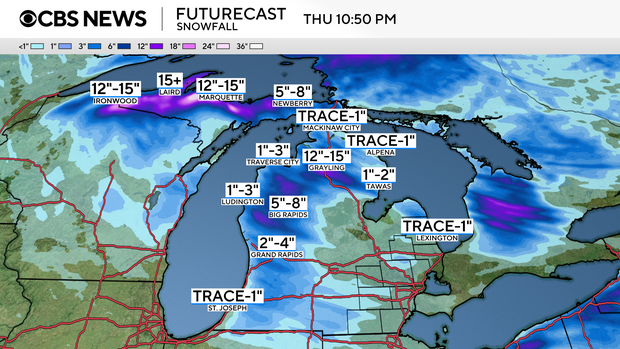
Let’s break down what the maps are showing, why this storm is taking shape, and what people in the U.P. should be ready for.
A Closer Look at the Storm Forming
The storm causing all this concern isn’t coming out of nowhere. Meteorologists have been tracking a developing low-pressure system sliding across the northern Plains. As it moves toward the Great Lakes, it’s pulling in cold Canadian air. When that cold air meets the moisture rising off Lake Superior, it creates ideal conditions for heavy snow.
This combination—cold air + lake moisture + strong winds—often leads to long, intense snow events in the Upper Peninsula. And this time, all three ingredients are lining up perfectly.
What the New Snowfall Maps Show
The latest maps highlight the areas most likely to get hit. The colors on the map—shifting from blue to deep purple—tell the story clearly: the heaviest snow will fall across the western and central U.P.
The hardest-hit locations include:
Marquette & surrounding area.
Ironwood through
Higher elevations near the northern coastline
Some areas are expected to see a foot or more of snow, and in lake-effect zones, totals could easily climb toward 18–20 inches if the snow bands stay steady.
Even places outside the main snow belts—like Ste. Marie and —will get enough snow to make roads slippery and visibility poor.
When the Storm Will Arrive
The storm isn’t a quick overnight event. It will build slowly, deepen, and then stick around long enough to cause real disruption.
Expected timeline:
• First wave:
Light snow enters the western U.P. late in the day, gradually spreading east.
• Intensification overnight:
Snow becomes heavier, winds pick up, and visibility begins to drop.
• Peak hours (most dangerous):
The second day will bring the highest snowfall rates, with some areas getting an inch or two per hour. Blowing snow will make it difficult to see even a few feet ahead in open areas.
• Gradual improvement:
The snowfall will ease up, but lake-effect flurries and strong winds may continue to cause trouble.
The storm could stretch across two to three days in total, especially in the lake-effect belts.
Why the U.P. Is Getting Hit So Hard
The Upper Peninsula is known for its snow, but the setup this time is especially strong.
A few reasons why:
• Lake Superior is still relatively warm, feeding the storm with moisture.
• Northwest winds are perfectly aligned to push snow straight into the U.P.’s snow-prone zones.
• The terrain, particularly the higher elevations, traps snow and increases totals.
• The early-season cold means nothing will melt—snow will accumulate quickly.
This is the classic recipe for a long-lasting, heavy winter storm.
How This Storm Could Affect Daily Life
A storm like this touches every part of daily life in the Upper Peninsula—from schools and roads to power lines and airports.
1. Travel Problems
Roads will be slippery and visibility could drop to almost zero during the heaviest snow. Highways like US-41, M-28, and US-2 may become difficult or dangerous to drive on. Drivers could see drifting snow, icy patches, and sudden whiteouts.
2. School Closures
Districts across Marquette, Ironwood, and other communities may announce delays or snow days depending on conditions.
3. Power Issues
Strong wind gusts combined with heavy snow can snap tree limbs and knock down power lines, especially in rural areas.
4. Flight Delays
Airports such as Sawyer International may see delays or cancellations due to poor visibility and the need for constant runway clearing.
How Residents Can Prepare
People in the U.P. are used to tough winter weather, but early storms can catch even seasoned locals off guard. Preparation is important.
For homes:
Make sure heating systems are working.
Keep flashlights, batteries, and blankets ready.
Have enough food and water to last a few days.
Check that generators (if you have one) are fueled and safe.
For vehicles:
Fill the gas tank.
Pack an emergency kit with blankets, phone chargers, and food.
Check tires and wipers.
Keep a shovel and ice scraper in the car.
If you must travel:
Drive slower than usual.
Keep headlights on.
Leave extra distance between vehicles.
Avoid isolated backboards during the storm.
What Whither Experts Are Saying
Meteorologists are urging people to take this storm seriously. Many have emphasized that the storm isn’t just a short burst of snow—it’s a slow-moving system capable of creating long hours of difficult conditions.
Some experts warn that the lake-effect component could lead to totals higher than originally forecast if narrow snow bands lock in place over certain communities.
How This Storm Compares to Past Events
The Upper Peninsula has seen plenty of storms, but a system this strong arriving this early in the season is unusual. It shares similarities with:
An early-season storm in 2017 that shut down parts of the U.P.
The long-duration lake-effect event in 2019
Thanksgiving week storms from 2021
However, this storm’s biggest advantage—warmer lake water fueling more intense snowfall—makes it stand out.
Community Response So Far
Local governments and public works crews are preparing ahead of time:
Salt trucks have been moved into place.
Snowplow teams are on standby for extended overnight shifts.
Emergency alerts are being updated regularly.
Some shelters are preparing in case of power outages.
Residents have also begun stocking up on essentials and clearing driveways before the first flakes arrive.
After the Storm Passes
The snow won’t disappear quickly. Forecasts show temperatures staying below freezing, meaning the will remain on the ground. Even after the main storm moves on, lake-effect snow may continue in some areas.
Roads may remain icy for days, especially at night. And early signs show another weather system may trail behind this one in the following week.
The updated maps make one thing very clear: Michigan’s Upper Peninsula is about to face a significant winter storm, one capable of slowing down daily life and putting real strain on roads, power lines, and travel plans. Even though the U.P. is one of the toughest, snow-ready regions in the country, storms like this remind everyone of how quickly conditions can change.
For now, the best preparation is simple: stay informed, stay indoors during the worst hours, and stay ready. Winter is arriving early, and it’s coming in strong.



Pingback: NFL Thanksgiving: Big Upsets Coming
Pingback: Fast Food Open or Closed on Thanksgiving 2025
Pingback: Is Netflix Trying to Buy Warner Bros. or Kill It?
Woah! I’m really loving the template/theme of this blog.
It’s simple, yet effective. A lot of times it’s challenging to get that “perfect balance” between superb
usability and appearance. I must say you’ve done a great job
with this. In addition, the blog loads extremely quick for me on Firefox.
Excellent Blog!