'Have a great life!' Trump orders prison release of disgraced ex-lawmaker Santos

Trump frees disgraced ex-lawmaker Santos from prison

On October 17, 2025, President Donald Trump announced via his social-media platform that he had commuted the sentence of former U.S. Representative George Santos, leading to Santos’s immediate release from federal prison. The decision has ignited debate across political lines about justice, cronyism, redemption and the nature of executive clemency.
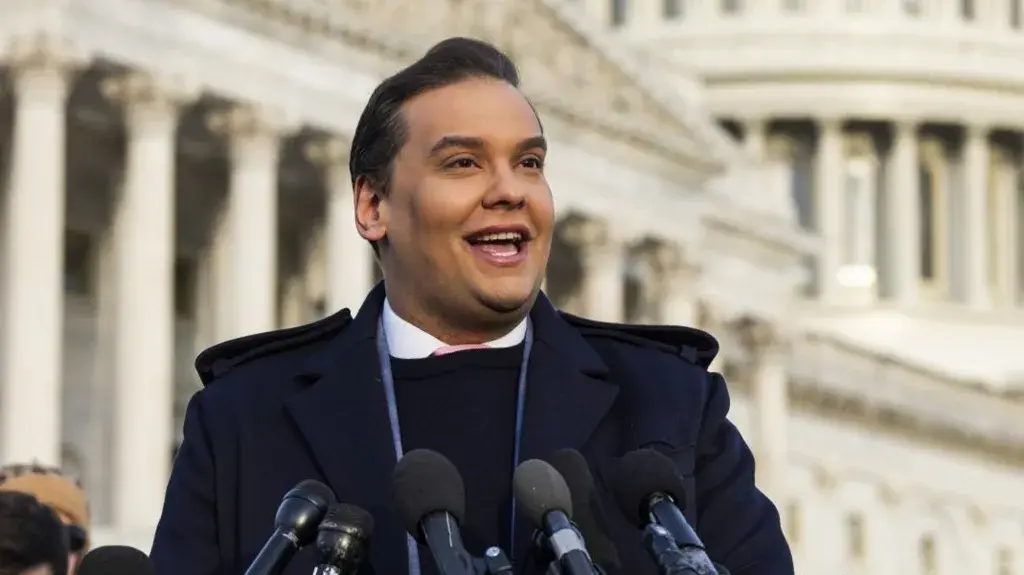
Trump frees disgraced ex-lawmaker Santos from prison

Who is George Santos?

George Santos is a former Republican congressman from New York’s 3rd District. He was elected in 2022, becoming the first openly gay Republican elected to Congress.

However, within weeks of his election, the media began exposing a large number of false claims on his résumé: fabricated education history, exaggerations of work experience (e.g., claiming he worked at Goldman Sachs and Citigroup), false claims about his family (including that his mother died in the September 11 attacks) and misrepresentations of his heritage.

In December 2023, the U.S. House of Representatives voted to expel Santos — making him the sixth member in the chamber’s history to be expelled, and the first Republican to be expelled without having been convicted at the time. In August 2024, Santos pleaded guilty to wire fraud and aggravated identity theft as part of a plea deal.  In April 2025, the court sentenced him to 87 months (over 7 years) in federal prison.  He reported to prison on July 25, 2025, at the Federal Correctional Institution in Fairton, New Jersey. The criminal offenses included:

Deceiving donors and using campaign funds for personal expenses. Stealing the identities of 11 people (including family members) to steer campaign contributions. Making false reports to the Federal Election Commission (FEC).

Filing fraudulent unemployment-benefit claims and falsely inflating his assets and background.

At sentencing, the judge described Santos as an “arrogant fraudster who talked out of both sides of his mouth.” Prosecutors argued that his misconduct made a mockery of the election system.

What Did Trump Do?

On the evening of October 17, 2025, Trump posted on his social-media platform:

“George Santos was somewhat of a ‘rogue,’ but there are many rogues throughout our Country that aren’t forced to serve seven years in prison.”“George has been in solitary confinement for long stretches of time, and by all accounts, has been horribly mistreated. Therefore, I just signed a Commutation, releasing George Santos from prison, IMMEDIATELY. Good luck George, have a great life!”

The commutation order released Santos immediately and also waived further fines, restitution, probation, supervised release or other conditions tied to his plea agreement — a sweeping mitigation of consequences.

Importantly, a commutation does not overturn the conviction — it simply reduces or ends the sentence. The record of conviction remains.

Why Did Trump Grant Clemency?

Several explanations and factors have been highlighted:

Political loyalty: Trump referenced that Santos had “always voted Republican.” the commutation is part of a pattern of clemency granted toward Republican figures.

Alleged mistreatment and solitary confinement: Trump claimed Santos “had been horribly mistreated” and spent long periods in solitary confinement.  Santos himself had written a letter published in a Long Island paper, appealing to Trump and describing his time in prison as harsh.

Comparative injustice argument: Trump compared Santos’s misdeeds to those of Democratic Senator Richard Blumenthal, accusing Blumenthal of lying about his military service and arguing that Santos’s sentence was disproportionate.

Pressure from allies: Representatives such as Marjorie Taylor Greene lobbied for Santos’s release, calling the seven-year sentence for campaign related offenses “a grave injustice.”

What Does This Mean — Legal & Political Implications

Legal consequences

While Santos is free from prison, his conviction remains on record. He is still a convicted felon.

Civil disabilities tied to the conviction (such as loss of certain voting or professional rights depending on state law), tax liabilities, or future civil actions remain possible. The commutation does not erase those.

The fact that restitution and forfeiture obligations were waived raises concerns among victims and legal watchers about accountability for victims of his actions.

Political implication.

The decision deepens concerns about the use of presidential clemency as a tool for political patronage rather than strictly for justice or mercy. Some Republicans and many Democrats called this move “corrupt” or “a feature of corruption.”

Republicans are split: some hail Santos’s release as a necessary second chance, while others say the magnitude of his wrongdoing merits the original sentence. For instance, Rep. Nick LaLota (R-NY) said Santos’s crimes “warrant more than a three-month sentence.”

For Trump, this is both a signal to his base (that loyalty will be rewarded) and a piece in his broader effort to reshape the federal clemency landscape.

For public trust: the move may undermine confidence in a justice system that appears more lenient for politically connected individuals.

Ethical & societal implications

Victims of the fraud Santos committed may feel justice was denied if restitution obligations are removed.

The message sent: high-profile, non-violent white-collar offenders may see their sentences cut short if aligned politically.

It raises questions about equality before the law and whether campaign finance crimes are punished as harshly as other offenses.

The Road to This Moment — Timeline Recap

2022: Santos wins election to Congress amid fabrications.

Late 2022 – early 2023: Investigations reveal lies and misconduct.

October 2023: Santos indicted by federal prosecutors for fraud and identity theft.

December 1, 2023: The House votes to expel him.

August 19, 2024: Santos pleads guilty.

April 25, 2025: Sentenced to 87 months in prison.

July 25, 2025: Reports to prison in New Jersey.

October 17, 2025: Trump commutes his sentence and orders his release.

Reactions — Support and Criticism

Supporter.

Marjorie Taylor Greene, among others, praised the decision and decried Santos’s treatment in prison as “torture”.

Santos’s attorney described the result as a “fair and commensurate” sentence after the commutation.

House Minority Leader Hakeem Jeffries (D-NY) said: “Donald Trump has time to free serial fraudster George Santos from prison. But he can’t be bothered to address the Republican healthcare crisis crushing working-class Americans.”

Former Rep. Adam Kinzinger (R-IL) called the decision “a feature of corruption… if you like me you can get away with anything.”

Some GOP members from New York criticized the short time served (“less than three months”) as undermining justice.

What’s Next for Santos?

Though released, Santos faces a complicated future:

He remains a convicted felon, which limits his ability to vote (depending on state rules) or hold certain federal posts.

He will likely face civil lawsuits or claims from victims seeking restitution.

His public reputation is deeply damaged, and any attempt to revive a political career will face heavy headwinds.

He may attempt to rebuild a private-sector life, leveraging media or commentary, but the legitimacy of such efforts will be questioned.

Bigger Picture: Trump & Clemency Strategy

Trump’s move fits into a broader pattern: since returning to the White House in January 2025, he has granted clemency to a number of high-profile figures, many aligned with him politically.

This raises systemic questions:

Should executive clemency be used more for mercy and justice (e.g., for first-time offenders, terminally ill prisoners) or for political patronage?

What standards govern who qualifies for clemency? Critics argue the process is opaque and potentially unfair.

Does lavish clemency for campaign-finance and identity-theft offenses send a message that such crimes are less serious than, say, violent crimes?

Moral and Democratic Implications

Rule of law: The perception that justice is not equal for all undermines democratic legitimacy.

Public trust: When high-profile offenders get early release, victims and the general public may lose faith in institutions.

Campaign-finance accountability: Santos’s case highlights the dangers of lax enforcement and the need for transparency in political fundraising.

Executive power: The broad nature of presidential clemency gives substantial discretion; how that power is used reflects on the office.

The commutation of George Santos’s sentence by Donald Trump is one of the most controversial uses of presidential clemency in recent memory. At face value, it provides a dramatic reversal of accountability for a lawmaker who admitted to a string of frauds and deceptions. It reflects a judgment that the seven-year sentence was too severe and that loyalty and political alignment count—but it also raises uncomfortable questions about fairness, political influence in the justice system, and how Americans view punishment and redemption.

For George Santos, his prison days are over. For victims of his crimes, however, the relief may be limited. For the American public, this episode serves as a reminder of the intersection between politics and justice—and the unresolved tensions that lie there.


Comments

No comments yet. Why don’t you start the discussion?

Leave a Reply

Your email address will not be published. Required fields are marked *